
Protect Your Glass from Vandalism
ANTI-GRAFFITI FILM - LOS ANGELES & ORANGE COUNTY
Graffiti on glass is a business problem that doesn’t announce itself in advance. One morning you show up and someone has tagged your storefront, scratched your windows, or etched your glass with acid. The damage is done and now you’re looking at replacement costs, lead times, and the impression it leaves on customers walking by.
Anti-graffiti film is a clear, sacrificial layer that sits on the surface of your glass. When vandalism happens, you replace the film instead of replacing the glass. Faster, cheaper, and far less disruptive to your business.
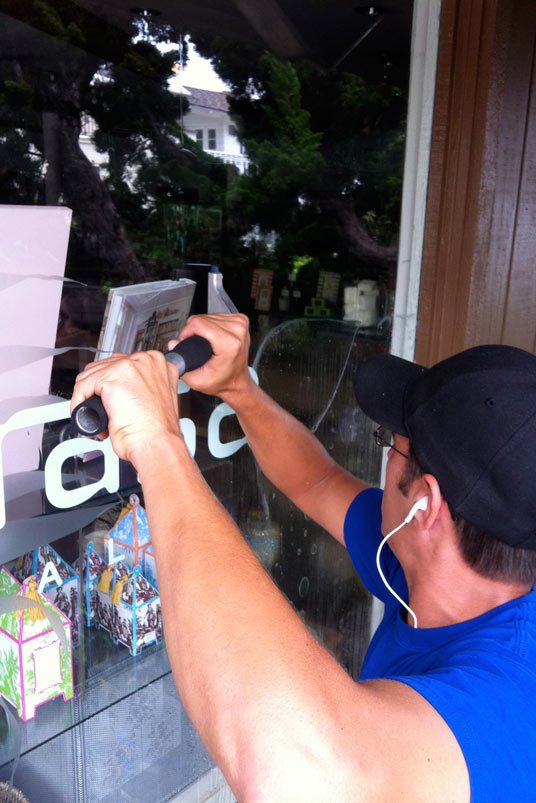
The concept is simple. A thick, optically clear film adheres to your glass surface. It’s nearly invisible once installed. When someone tags, scratches, or etches the glass, the damage stays on the film layer. We come out, remove the damaged film, and apply a fresh layer. Your glass underneath remains untouched.
Think of it as a screen protector for your storefront.
The film can be installed on interior or exterior glass surfaces depending on your situation. Exterior application protects against spray paint, markers, and scratching. Interior application works for retail environments where customers or foot traffic might cause accidental damage.
Ground-level glass in high-traffic areas takes the most abuse. Downtown corridors, transit-adjacent businesses, and shops in areas with active nightlife are common targets. One tag can sit on your glass for days while you wait for a glazier. With film in place, we can usually turn around a replacement within 24 to 48 hours.
Late night foot traffic, intoxicated passersby, and the general wear that comes with being open until 2am. Restaurants along the South Bay coast and throughout LA see this regularly. The film pays for itself the first time it saves you from a glass replacement.
Bus shelters, metro stations, and municipal buildings deal with graffiti constantly. Film makes removal a maintenance task instead of a capital expense.
Lobbies, parking structures, and ground-floor glass in corporate environments. Vandalism isn’t always external. Sometimes it’s disgruntled employees, sometimes it’s random. Either way, film protects the asset.
Exterior windows, entryways, and gymnasium glass. Schools deal with vandalism more than most administrators want to admit. Film keeps replacement costs manageable and minimizes disruption to operations.
Elevator cabs, lobby glass, pool enclosures, and parking structures. Property managers know that graffiti in common areas affects resident satisfaction and property values. Film makes cleanup fast and predictable.
Graffiti patterns aren’t random. Certain corridors and neighborhoods see more activity than others.
In the South Bay, we see consistent work along Pacific Coast Highway from Redondo Beach through Long Beach, particularly around retail clusters and bar districts. Downtown Hermosa and the Pier Avenue corridor get hit regularly. Manhattan Beach stays cleaner overall but the downtown area around Manhattan Beach Boulevard still sees occasional tagging.
Torrance has a different pattern. The commercial corridors along Hawthorne Boulevard and around Del Amo see more activity than the residential neighborhoods. Same with the industrial areas near the 405.
In greater Los Angeles, transit-adjacent retail takes the most abuse. Anywhere near a Metro station, any ground-floor glass along a busy pedestrian corridor, any business that stays open late. Hollywood, Downtown LA, Venice, and the Westside all keep us busy.
Orange County has its own hotspots. Beach communities like Huntington Beach and Newport Beach deal with it seasonally. Santa Ana and Anaheim see it year-round in certain commercial districts.
We know where the problems are because we’ve been responding to them for over two decades.
We install CSI-Guard, our graffiti protection film designed for commercial applications. It’s optically clear, scratch-resistant, and rated for both interior and exterior use.
Specifications:
For higher-risk environments or repeat vandalism situations, we carry thicker options that provide additional protection against deeper scratching and more aggressive attacks, this is our standard.
Replacing a vandalized storefront window involves multiple costs. The glass itself, the glazier’s labor, lead time while you wait for fabrication, and the impression your business makes while sitting there tagged or boarded up.
Anti-graffiti film changes the equation. The film costs a fraction of replacement glass. Removal and reinstallation is measured in hours, not days. Your glass stays protected underneath, so one incident doesn’t turn into a recurring expense.
For businesses in areas with repeat vandalism, the math becomes even clearer. Three or four film replacements still cost less than one glass replacement. And you never have plywood in your window frame while waiting for new glass to arrive.
We want to be clear about what each product does.
Anti-graffiti film protects against surface damage: spray paint, markers, scratching, light etching. It does not protect against impact. If someone throws a brick through your window, the glass is still breaking. For impact protection, you need safety film, which is a different product designed to hold glass together when struck.
If you need both vandalism protection and impact resistance, we can layer the solutions or recommend a combination approach. But we won’t sell you anti-graffiti film and let you think it’s going to stop a break-in. Different problems, different solutions.
Anti-graffiti film installation is straightforward and minimally disruptive.
We measure your glass, cut the film to spec, and apply it using wet application techniques that ensure a bubble-free, invisible finish. Exterior applications typically take longer to cure than interior, but both are functional immediately after installation.
For storefronts and retail environments, we schedule installation during off-hours to avoid any impact on your business operations. Most jobs complete in a single visit.
We’ve been doing this long enough to know what works and what doesn’t. We won’t oversell you on a product that doesn’t fit your situation, and we won’t disappear after the installation.
If you’re dealing with graffiti on your glass right now, or if you want to protect your property before it happens, we can help. Free on-site consultations throughout Los Angeles and Orange County.
Phone: (310) 372-5357
Clearview Sun Control, Inc.
811 N Catalina Ave, Redondo Beach, CA 90277
CA Contractor License #774678 | Since 2001
"*" indicates required fields
learn more
you are here
learn more
This comes up constantly and it’s a fair question because both products look identical once installed. The main difference is in the adhesive. Anti-graffiti film uses a much less aggressive adhesive specifically so it can be removed and replaced cleanly without damaging the glass or leaving residue behind. That’s the whole point, when vandalism happens, removal and replacement needs to be fast and cost-effective. Security film uses a much stronger adhesive because its job is to hold glass together on impact, not to be peeled off and swapped out. The film construction is different too, but you wouldn’t notice that from looking at either one. If you need both surface protection and impact resistance, those are two separate products for two separate problems.
Anti-graffiti film is only available in clear. That’s by design, the whole point is to protect your glass without changing its appearance. If you’re also looking for heat reduction, glare control, or a tinted look, that’s a separate solar or security film product. In some situations we can layer solutions, but the graffiti film itself is always clear.
It depends on the exposure. Glass with heavy direct sun, south or west-facing storefronts that take full afternoon sun… you’re looking at 3 or more years before the film needs replacing. Less direct exposure stretches that to 5 or more years. North-facing glass with minimal sun can last 10 years or longer, assuming reasonable care. Two things that shorten lifespan significantly: harsh cleaning chemicals and harsh environments. The daily morning marine layer and salt air we deal with throughout the South Bay accelerates degradation as an example compared to an identical installation a little more inland facing north.
Yes. For businesses in areas with repeat vandalism we can set up a maintenance arrangement so you’re not making a separate call every time something happens. Reach out directly to talk through what makes sense for your location. Call us at (310) 372-5357.
Yes, with one important detail. Polished metal, mirrors, and similar surfaces are generally fine. Acrylic requires a special base coating applied underneath the graffiti film before installation. If you have acrylic surfaces you’re looking to protect, let us know upfront so we can prepare accordingly.