
The Ultimate Window Film Choice
SPECTRALLY SELECTIVE WINDOW FILM
The clients who choose Premium solar film already know what they don’t want. They don’t want a mirrored exterior changing the look of a building they spent years getting right. They don’t want the gray cast that comes with traditional darker films. They don’t want to settle for “good enough” when the rest of the project was specified to a higher standard. What they want is heat rejection that actually performs, with a film so close to invisible that most people walking past won’t realize the glass has been treated at all.
The clients we install Premium for fall into a few clear groups, each with a different reason but the same underlying priority: appearance can’t be the cost of performance.
Executive offices and corporate boardrooms. The view from a corner office is part of why someone took the corner office. Premium film keeps that view clear, day and night, while solving the heat that make those rooms uncomfortable in the afternoon. Most of our commercial Premium installations across Los Angeles and Orange County are in spaces like these.
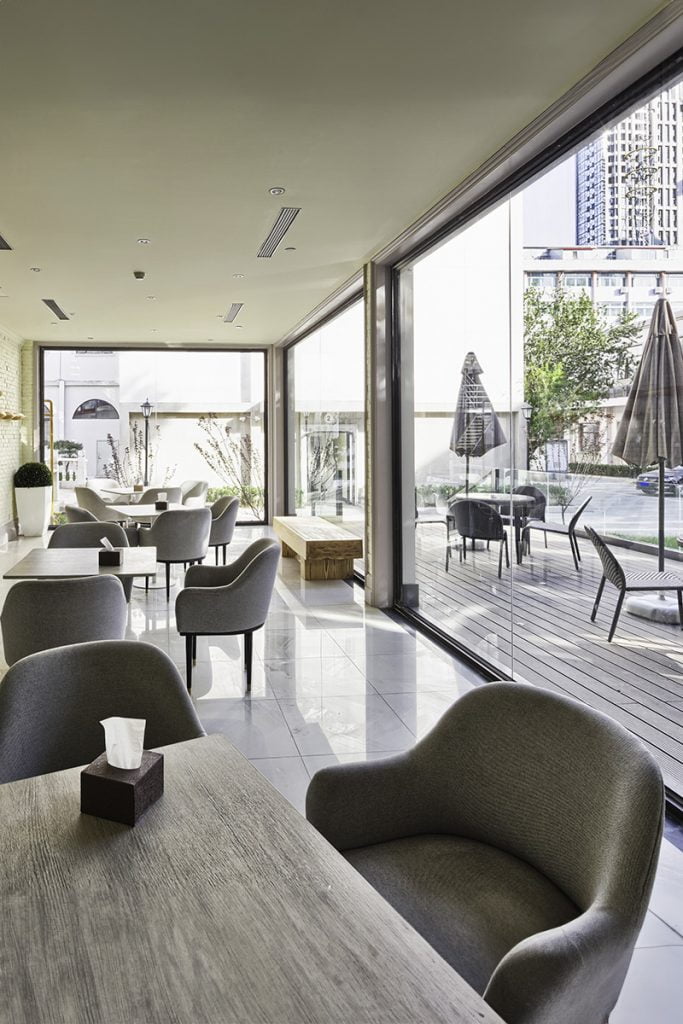
Luxury hospitality and retail. Hotels, restaurants with floor-to-ceiling glass, high-end boutiques, and showrooms where the lighting was designed by someone with a five-figure invoice. Reflective film changes how that environment reads from outside. Premium doesn’t.
Architect-specified residential. When a home was designed around its glass, putting reflective or visibly tinted film on it after the fact reads as an afterthought. Premium installs without altering the architectural intent. We see this most often in modern coastal homes throughout Manhattan Beach, Hermosa Beach, and along the Palos Verdes peninsula.
Oceanfront and view-priority homes. Properties where the entire reason for the home is what’s visible through the windows. Premium delivers heat and UV protection without the gray, blue, or bronze tint that darker films introduce.
Buyers who want UV and heat protection without darkening their windows. Most homeowners and office workers don’t realize how much UV they’re exposed to through untreated glass during the workday. Every quality film we install blocks more than 99% of UV across all tiers, so UV alone isn’t what makes Premium different. What Premium adds is high heat rejection and meaningful infrared filtering at high visible light transmission … the protection people often want for health-conscious reasons (photosensitive skin conditions, families with skin cancer history, prevention-minded UV reduction) without committing to a darker shade or visible color shift on the glass. For buyers who want the protection without the trade-off, Premium fits.
Laminated glass installations. Laminated glass (used in commercial storefronts, security applications, hurricane-rated windows, and high-end residential glazing) has compatibility restrictions with most window films because of heat absorption at the glass surface. Premium spectrally selective films absorb less heat than traditional darker films, making them a better fit for many laminated glass applications where standard films aren’t recommended by the glass manufacturer. For projects with laminated glazing, this matters … most installers either don’t know about these restrictions or won’t tell you when they’re putting an incompatible film on your glass.
This is the question we hear most often, and the honest answer is that for many properties Professional is the right call. Ceramic Professional film delivers excellent performance for the cost, and we install far more of it than Premium. The case for going up to Premium comes down to three things.
Visible light transmission. Premium spectrally selective films can hit 70% VLT or higher while still rejecting most of the heat. That’s a level of clarity Professional ceramic can’t match without sacrificing performance. For a window where the priority is keeping the glass looking like glass, this is the technology that does it.
Color neutrality. Most window films introduce some color shift … usually a subtle gray, blue, or bronze. Premium spectrally selective films are engineered to minimize this. Looking through a Premium-treated window, the color of the world outside reads true.
Long-term performance. Premium films are built around precious metals construction rather than dyes or basic ceramic. The result is a product that holds its performance and appearance for decades rather than years, with manufacturer warranties that reflect that.
If any of those three things matter to your project, Premium is the answer. If they don’t, we’ll tell you Professional fits better and recommend that instead. We don’t push the highest-priced option for the sake of the margin.
Not every property can accept interior film application. Laminated glass with specific compatibility restrictions, certain dual-pane configurations, skylights, atrium glazing, and large modern commercial glass systems are common situations where interior film isn’t the right answer. For those projects, we install exterior-applied Premium spectrally selective film.
The exterior product family has improved significantly over the past few years. Warranties now run up to 10 years for vertical surface installations, up from the 7-year term that was standard until recently … 5 years for sloped surfaces 20 degrees or more from horizontal because of the increased weather exposure. The newest exterior Premium products are practically invisible on the glass and reach 55% total solar energy rejection on dual-pane installations at 69% visible light transmission … the same clarity Premium clients expect from interior installations, but with stronger heat performance.
Exterior film achieves better heat numbers at the same VLT because it stops solar energy at the source. By rejecting heat before it passes through the glass, exterior film prevents the heat absorption that interior film has to manage after the energy has already entered the glazing system. For dual-pane and laminated glass especially, that “stop it at the source” approach delivers stronger real-world performance with less thermal stress on the glass itself.
When we walk a property for a Premium recommendation, the interior-versus-exterior question is part of the conversation. Sometimes interior is the obvious choice. For projects where exterior is the right answer, the newer products and longer warranties have made it a much stronger option than it was even three or four years ago.
The general rule with solar film has always been “darker means more heat rejection.” Spectrally selective Premium film breaks that rule. The technology selectively filters the parts of the solar spectrum that produce heat (primarily near-infrared radiation between 780 and 2,500 nanometers) while letting visible light pass through largely uninterrupted. The film recognizes that heat and light are different parts of the same solar spectrum and treats them differently.
The most effective spectrally selective products use precious metals (in some cases including small amounts of gold) in the manufacturing process. That’s not marketing language. The metals are what make the spectral filtering possible. There’s a reason these films cost more, and it’s not branding.
One detail worth knowing: some manufacturers print impressive infrared rejection numbers on their product cards, but those numbers can represent a narrow slice of the I/R spectrum rather than the whole range. We work with manufacturers whose published numbers reflect the full near-infrared band, because that’s what actually translates to performance you’ll feel inside the room. Ask about this when you’re comparing quotes from anyone.
Our Premium installations across Los Angeles and Orange County tend to fall into recognizable patterns.
A modern home in Manhattan Beach where the entire west-facing wall is glass and the homeowner refuses to consider anything that changes the look of the glass from outside.
A boardroom in a Class A office tower where the executives need afternoon glare control without converting their windows into mirrors.
A luxury restaurant in Newport Beach where the floor-to-ceiling windows are part of the dining experience.
A custom home in Hermosa Beach with a view of the Pacific that the homeowner spent two years getting right.
In all of these cases, Premium solar film is solving a real performance problem … heat, glare, fading, UV exposure … without introducing a visible solution. That invisibility is what justifies the cost.
We tell clients to choose Intermediate or Professional when the math doesn’t justify Premium. Some examples of when we steer clients down a tier:
Large square footage commercial where reflective Intermediate film delivers acceptable performance at a fraction of the cost
Properties where appearance is secondary to maximum heat rejection at the lowest cost
Rental properties or transitional commercial spaces where the long-term Premium performance won’t be realized by the current owner
North-facing exposures. Solar load isn’t significant on north-facing glass, but reflected UV from nearby walls, windows, and surfaces can still cause some interior fading and exposure over time. The good news is you don’t need Premium for this. Every quality solar film we install blocks more than 99% of UV across all tiers, so a light-VLT Intermediate or Professional film delivers the same UV protection on north exposures at a fraction of the cost. We’ll recommend the right tier for the actual problem … not Premium for the sake of Premium.
Budget-driven projects where the additional Premium cost is better spent elsewhere on the property
Properties with serious fade protection priorities. When protecting valuable art, designer furniture, or hardwood floors is the primary concern, a darker Professional ceramic at around 50% VLT or lower delivers better total fade protection than Premium because visible light contributes meaningfully to fading. Every quality film we install blocks more than 99% of UV across all tiers, so the difference comes down to how much visible light you’re willing to reduce. Premium is for the buyer who refuses to compromise on visible clarity. If fade protection is the top priority, we’ll recommend Professional and explain why.
The honest truth is that most projects don’t need Premium. The ones that do, need it for specific reasons we can identify on a site visit. That’s where the recommendation gets made.
We install Premium spectrally selective solar film throughout Los Angeles and Orange County. Our Premium projects are concentrated in the affluent coastal corridor … Manhattan Beach, Hermosa Beach, the Palos Verdes peninsula, and into Newport Beach, Newport Coast, and Laguna Beach … along with high-end commercial projects across the broader LA market.
To schedule a site visit and quote, call (310) 372-5357 or request a quote online. Premium projects start with a property walk-through, sample comparisons on your actual glass, and a conversation about what matters most to you. We don’t quote Premium over the phone.
For some projects yes, for many no. Premium makes sense when visible light clarity and color neutrality can’t be compromised … typically luxury residential, executive commercial spaces, and properties where appearance is a primary concern. For most other applications, our ceramic Professional film delivers excellent performance at lower cost. We give an honest recommendation during the site visit based on what you’re trying to accomplish, not what we’d prefer to install.
Visibility depends on the specific Premium product and the visible light transmission you choose. The lightest Premium films are nearly invisible on standard glass, and most people won’t notice the glass has been treated. Darker Premium options exist for properties where some visible reduction is acceptable in exchange for higher heat rejection. We bring physical samples to every Premium consultation so you can see how each option looks on your actual glass before deciding.
Premium spectrally selective films typically reject 50% to 70% of total solar energy depending on the specific product and visible light transmission you choose. The technology is designed to filter near-infrared heat selectively, so you get meaningful heat rejection at high visible light transmission … which traditional darker films can’t deliver. We bring product spec sheets and sample comparisons to every consultation so you can see the actual numbers for the films we’d recommend for your project.
Yes, in most cases. Premium spectrally selective films don’t absorb as much heat at the glass surface as traditional darker films, which makes them better suited to laminated glass and certain dual-pane configurations than other film types. That said, we always verify the glass type before specifying a film. Specific glass configurations require specific Premium products to maintain compatibility with the glass manufacturer’s warranty, and we won’t install an incompatible film just to close the job.
Standard Premium spectrally selective film is designed for visible clarity, which means it doesn’t add daytime privacy on its own. If daytime privacy is a priority, we have two paths: a darker Premium film that reduces visibility through reduced light transmission, or a reflective Premium option that combines spectrally selective heat rejection with a subtle exterior reflection for view-blocking during daylight hours. The reflective Premium option is less common but available for the right project.
That’s part of why Premium exists. Standard Premium spectrally selective films minimize exterior color shift and reflection, so the building looks essentially the same after installation as before. Reflective Premium variants do introduce some exterior reflection by design, for properties where that’s preferred. Most architectural and historic projects we work with use the non-reflective Premium options specifically because they preserve the building’s intended appearance.