The most common call we get about privacy goes something like this. Someone bought a house in Redondo Beach or Hermosa, the neighbors are close, the foot traffic on the Strand is constant, and they want their living room back. They want to see out but not be seen. That’s a reasonable thing to want, and window film can deliver it, but the right film depends on a few things most people don’t think to ask about until after the installation is done.
We’ve been installing privacy window film throughout the South Bay and Orange County since 2001. Here’s what we’ve actually learned.
The First Thing You Need to Understand About Daytime Privacy Film
All window film privacy works on the same basic principle during the day. Light travels from brighter areas to darker ones. When it’s brighter outside than inside, which is almost always the case during daylight hours, film on your windows blocks the view in from outside while letting you see out clearly. The stronger the contrast between outside and inside light, the better the privacy effect.
That’s the good news. The thing nobody tells you upfront is what happens after dark. When interior lights come on at night and it’s darker outside, that contrast flips. Suddenly you can see in just as well as you can see out. Most window films don’t solve nighttime privacy. For that you need blinds, shades, or switchable smart film.
Non Reflective Solar Film: Natural Darkening
Non-reflective and low-reflective solar films are what most residential customers in coastal areas end up choosing, and for good reason. They darken the glass enough to limit the view in from outside during the day without creating a mirror-like exterior appearance. From the street your windows look slightly tinted, not like a one-way mirror, just darker than clear glass.
The privacy level depends on the VLT rating (Visible Light Transmission), the percentage of light the film allows through. A 35% VLT film is a little darker and more private than a 50% VLT film. For homes in Redondo and Hermosa Beach where the marine layer keeps things overcast through late morning several months a year, going too dark can make interior rooms feel dim during June Gloom. We factor that into our recommendations rather than just defaulting to whatever’s darkest.
Ceramic Solar Film: Professional Series
Ceramic Solar Films are the best performers in this category. Made with nano-ceramic particles, they reject heat efficiently without adding reflectivity to your glass. We were among the first dealers to introduce ceramic window film technology to the Los Angeles market back in 2001 at the time most of the industry was still defaulting to metallic with dyed films. That early familiarity with the product means we know which ceramic lines hold up and which ones don’t, and we’ve watched them perform in South Bay coastal conditions long enough to have real opinions about it.
Ceramic film holds up well in salt air environments, which matters for homes close to the water. Certain metallic films degrade faster in coastal conditions, edge corrosion and delamination are real issues we see in beachside installations that don’t get flagged during the sales process. Ceramic side steps that problem entirely and carries world class warranties to back it up. It’s our most common recommendation for South Bay residential work.
Dyed Solar Film: Intermediate Series
Dyed solar films, are more economical than ceramic and work differently at a construction level. Instead of ceramic particles, they incorporate layers of dye between the adhesive and the protective top coating to reduce the amount of visible light coming through. When dyes are combined with metals the product becomes what we call a solar film — the metals add heat rejection properties that dye alone can’t deliver. By itself, dye is really a decorative film product, which is why you see transparent colored options like blue, green, and yellow in that category.
For privacy purposes dyed films do the job at a lower price point. They won’t perform as well on heat rejection and they won’t last as long, especially in direct sun or coastal salt air. For a north-facing window with no heat issue they can make sense. For a south or west-facing room that heats up in the afternoon, ceramic is worth the upgrade. We’ll tell you which situation you’re in before recommending anything.
Reflective Solar Film: Your Daytime Privacy Mirror
Reflective window films work like one-way mirrors during the day. They reflect exterior light back out, creating a mirrored appearance from the outside while maintaining a clear view from the inside. The stronger the reflectivity, the stronger the privacy effect and the more mirror-like your windows look from the street.
This is the category with the most options and the most variables. The right choice depends on how much privacy you need, how important natural light is, what the windows face, and whether the exterior appearance matters to you or your HOA. Here’s how the main types break down.
Standard Reflective Film
Standard reflective film is the most common type you’ll see on large commercial buildings… office parks, retail centers, multi-tenant properties. It’s equally reflective on both the interior and exterior glass surface, which means from inside the building you’re also looking at a somewhat mirrored surface. That works fine in a commercial environment where nobody is sitting three feet from the glass all day. In a residential setting some people find the interior reflectivity distracting, especially in rooms where you spend a lot of time.
Privacy performance is strong. Reflectivity options range from light to very dark, so there’s flexibility depending on how much of a mirror effect you want from the street side. It’s mature technology, widely available, and on the more affordable end of the reflective film category. For the right situation it does exactly what it’s supposed to do.
Light Reflective Solar Film, or Spectrally Selective
Spectrally Selective ‘Reflective’ Films do something standard reflective films can’t… they allow a significant amount of natural light into the room while still creating a mirrored exterior appearance for daytime privacy. The technology selectively blocks heat-producing infrared wavelengths and UV while letting visible light pass through at a higher rate than a standard reflective film of comparable darkness.
For homeowners who want daytime privacy but don’t want to sacrifice the brightness of their space, this is usually the right conversation to have. A home office, a kitchen, a living room where you spend daylight hours, anywhere that light matters as much as privacy. You get the mirrored street-side appearance without the room feeling darker than it needs to. It sits at a higher price point than standard reflective but for the right application the performance difference is noticeable from day one.
Dual Reflective Films:
Dual reflective films are designed specifically to solve the one complaint people have about standard reflective film… the interior mirror effect. They feature a more reflective outer layer that handles daytime privacy from the street side, and a less reflective inner layer that gives you a cleaner, flatter view from inside the room. Same privacy performance from outside, significantly less mirror effect from inside.
For residential use this is almost always a better choice than standard reflective. The manufacturing process is more involved which puts it at a higher price point, but for a living room or bedroom facing a busy street or a walkable neighborhood like the ones we work in throughout the South Bay, it’s usually worth it. You’re not giving anything up on the privacy side and you’re gaining a noticeably more comfortable interior experience.
One thing worth mentioning here, highly reflective film of any kind can turn your windows into mirrors at night when interior lights are on and it’s dark outside. If you have a harbor view, an ocean sightline, or anything worth looking at after dark, we steer toward lower reflectivity options. Protecting the evening view is something that rarely comes up in a typical sales conversation but it should, and we make a point of bringing it up.
Decorative Films: Privacy with a Personal Touch
Decorative window films work differently from solar films. They obscure the view through the glass based on opacity or texture rather than light contrast, which means they provide privacy day and night. A frosted film on a bathroom window blocks the view at midnight just as effectively as it does at noon. That makes them the right call for certain applications and the wrong call for others.
The trade off is that they block your view out too. Frosted is frosted in both directions. If you want to keep the view but limit who can see in, decorative film is not your answer. If you have a window where the view doesn’t matter and privacy does, it’s often the cleanest and most permanent solution available.
We do a significant amount of decorative film work for commercial clients throughout the South Bay and Orange County. Office partitions, conference room glass, storefront windows, lobby doors. Custom logos, branded graphics, geometric patterns. If you can describe it or send us a vector file we can put it on glass
Frosted Films:
Frosted film is the most straightforward privacy solution we install. It gives glass the appearance of sandblasted or etched glass at a fraction of the cost, and unlike permanent glass treatments it can be removed or replaced without damaging the surface underneath. Light still passes through so the space doesn’t go dark, but visibility through the glass is eliminated completely.
Common applications are bathroom windows, sidelights next to front doors, glass panels in interior doors, and shower enclosures. In commercial settings we use it constantly on office partitions and conference room glass where people want an open feel without a fishbowl work environment. It comes in varying levels of opacity so you can dial in how much light you want while still getting full privacy.
Patterned Films
Patterned Films add visual interest to glass while controlling visibility. Geometric shapes, natural motifs, repeating textures, the options are extensive and they work well in spaces where a purely frosted look feels too clinical or plain. The pattern itself does the work of obscuring the view while letting light through in a way that looks intentional rather than functional.
We use patterned films frequently in retail environments, restaurant partitions, medical office waiting areas, and residential spaces where the homeowner wants something that reads as a design choice rather than a privacy solution. The effect is more decorative than a standard frost but the privacy performance is comparable depending on the density of the pattern. Worth looking at samples in person because what reads as opaque in a product photo can look quite different with light behind it.
Textured Films:
Textured films mimic the appearance of specialty glass finishes — etched, cut glass, ribbed, reeded, or sandblasted looks — without the cost of replacing the glass itself. For older homes or commercial spaces with plain glass that would benefit visually from something more refined, textured film is often the most cost effective upgrade available.
Privacy performance varies by texture. A heavily ribbed or deeply etched pattern obscures the view significantly. A lighter texture may provide partial privacy while adding visual character without fully blocking the sightline. We bring samples to consultations specifically because textured films look and perform differently depending on the light conditions in your space. What works perfectly in one room may not translate the same way in another.
Nighttime Privacy: The Limitation of Solar Films
This is the section most window film companies skip or bury at the bottom of the page. We put it here because it matters and because getting it wrong leads to disappointed customers.
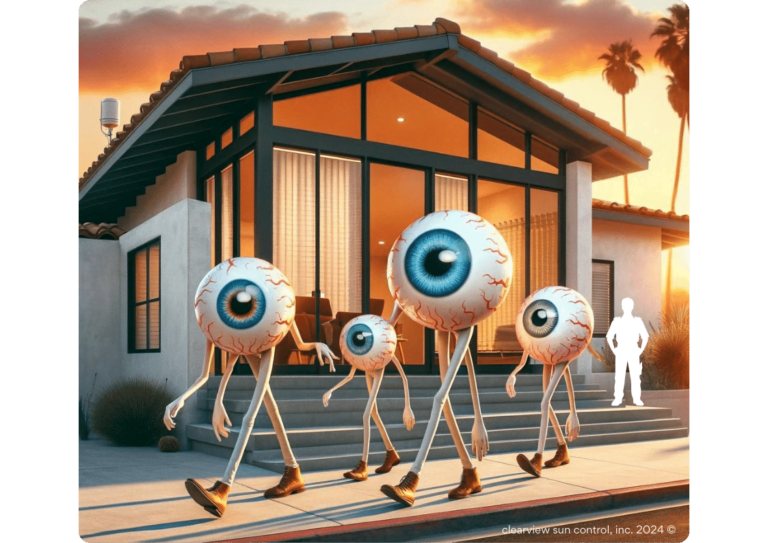
Solar and reflective films work on light contrast. During the day when it’s brighter outside than inside, the film blocks the view in while letting you see out. At night when interior lights are on and it’s darker outside, that contrast reverses. The film that gave you complete privacy at 2pm gives you almost none at 10pm with your living room lights on. This is not a defect. It’s physics. It applies to every solar and reflective film on the market regardless of brand or price point.
For rooms where nighttime privacy matters… a street facing bedroom, a ground floor living room on a walkable block, anywhere you don’t want to feel exposed after dark… you have two real options. The first is window treatments. Blinds, shades, or curtains used in the evening handle what the film cannot. The second is Switchable Smart Film, which goes from clear to opaque at the touch of a button and works at any hour regardless of light conditions outside.
N E W F O R 2 0 2 6 :
We now install Switchable Smart Film We now install Switchable Smart Film throughout the South Bay and Orange County. The technology has matured significantly and the price has come down to where it makes sense for residential applications that would have been cost prohibitive a few years ago. One touch and the glass goes from completely clear to fully opaque. No blinds, no shades, no compromising the view when you don’t need privacy. If 24 hour privacy on demand is what you’re after, it’s the only film product that actually delivers it. Learn more about Switchable Smart Film.
What It Comes Down To
Window film handles daytime privacy extremely well when the right product is matched to the right situation. The variables that matter are how much light you want to keep, what the windows face, how close the neighbors are, whether the evening view is worth protecting, and what the glass construction is underneath. Get those answers right and the film performs exactly as expected. Skip them and you end up with a room that’s either too dark, too mirrored, or private during the day but exposed at night.
We’ve been having these conversations with South Bay and Orange County homeowners and business owners since 2001. The consultation is free and we bring samples so you can see the options in your actual light conditions before committing to anything. That matters more than it sounds, a film that looks perfect in a showroom on a bright afternoon can feel completely different in your space on an overcast morning in June.
If you’d like to talk through your specific situation reach us at 310.372.5357, use the contact form on this page, or schedule a time directly through our online calendar. We typically respond same day.
Clearview Sun Control, Inc. — 811 N Catalina Ave, Redondo Beach, CA 90277. CA Contractor License #774678. Serving the South Bay and Orange County since 2001.